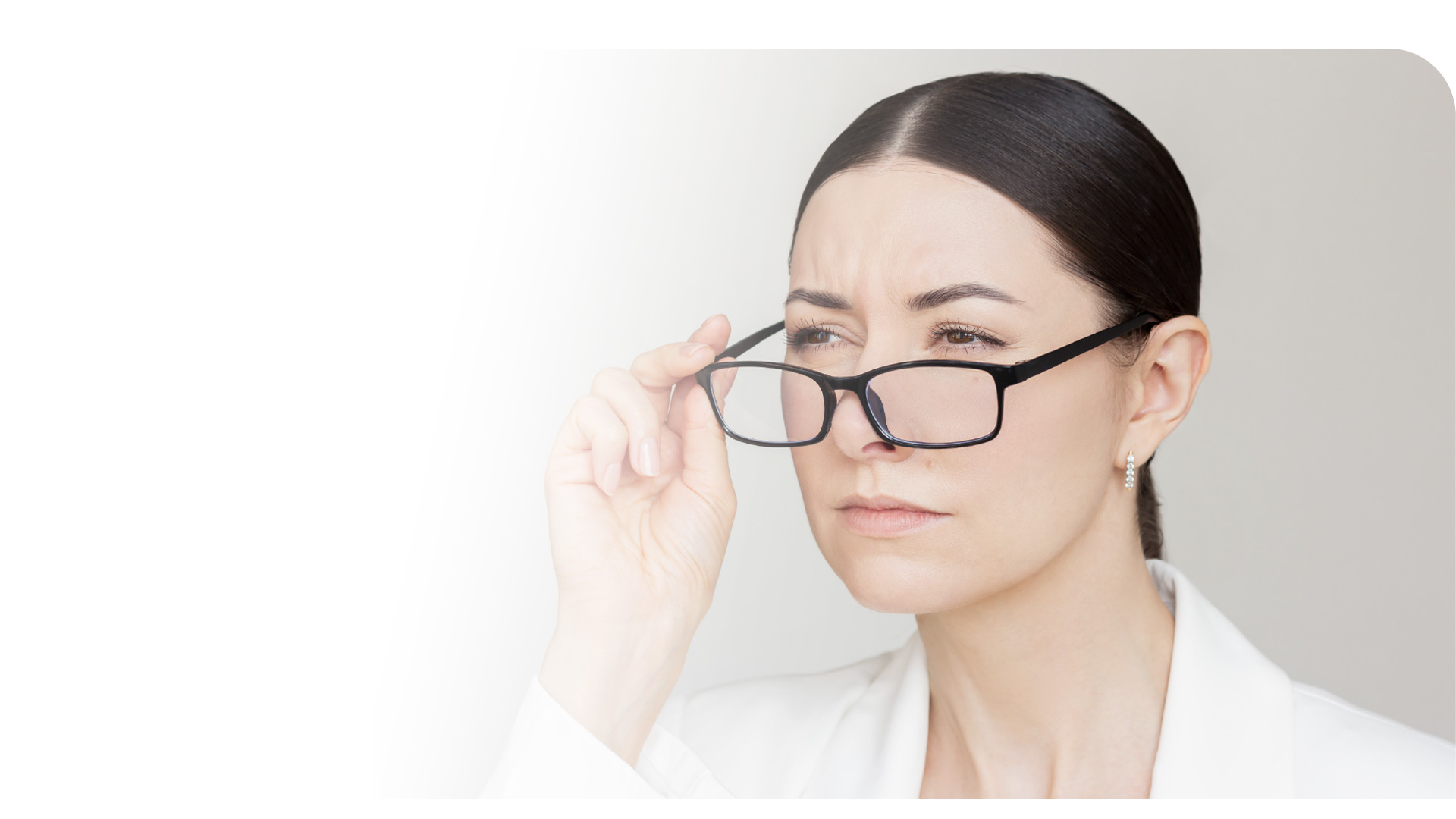
Hyperopia (farsightedness) is a refractive error in which distant objects are seen more clearly than near objects. Patients with hyperopia typically experience blurred vision at near distances, while distance vision may remain relatively clear, depending on the severity of the condition.
In clinical practice, the term hyperopia generally refers to refractive error present in younger individuals. In contrast, difficulty with near vision that develops after the age of 40 is usually classified as presbyopia, an age-related condition caused by reduced accommodative ability of the lens.
Hyperopia may also be present from birth, in which case it is referred to as congenital hyperopia.
Etiology and Pathophysiology
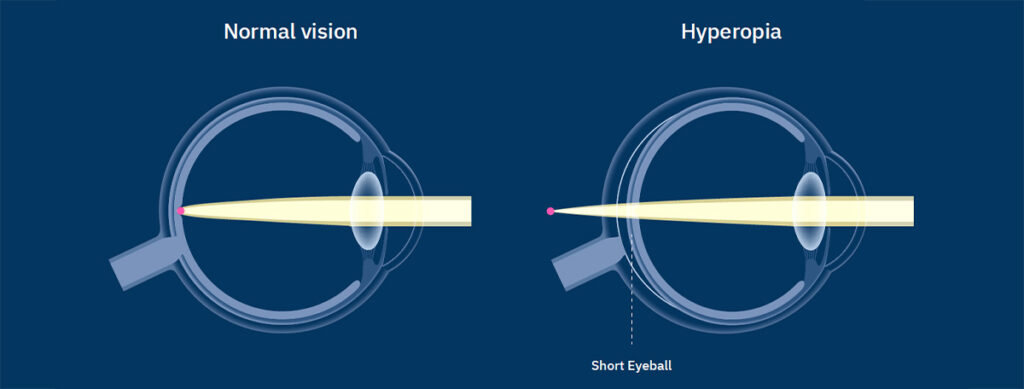
Hyperopia occurs when incoming light rays are focused behind the retina rather than directly on it. This is most commonly due to:
- A relatively short axial length of the eyeball, or
- Insufficient curvature of the cornea or crystalline lens
As a result, the eye has reduced refractive power, leading to blurred vision, particularly at near distances.
Genetic predisposition plays a significant role, and individuals with a family history of hyperopia are at increased risk of developing the condition.
Management and Treatment Options
Management of hyperopia depends on the degree of refractive error, patient symptoms, age, and lifestyle requirements. Available options include:
- Spectacle correction
Prescription glasses remain the most common, safe, and effective method for correcting hyperopia.
- Contact lenses
Suitable for patients seeking improved visual flexibility or those engaged in active lifestyles. Proper lens hygiene and adherence to recommended wearing schedules are essential to minimize the risk of complications.
- Refractive surgery
Surgical options may be considered in appropriate candidates following comprehensive ophthalmologic evaluation. These include:
- LASIK (Laser-Assisted in Situ Keratomileusis)
- PRK (Photorefractive Keratectomy)
- ICL (Implantable Collamer Lens), particularly in cases of moderate to high hyperopia
All surgical interventions require thorough preoperative assessment by an ophthalmologist to determine suitability and to ensure optimal outcomes.
ข้อมูลอ้างอิง
- สายตายาว สาเหตุ. สืบค้นเมื่อวันที่ 11 มีนาคม 2569 จาก https://samitivejchinatown.com/th/article/eyes-lasik/hyperopia