Non-Surgical
Treatment
Intravitreal (Anti-VEGF) Injection for nAMD
Non-Surgical
Treatment
Intravitreal (Anti-VEGF) Injection for nAMD
What is Neovascular (wet) Age-Related Macular Degeneration (nAMD)?
nAMD is a common cause of vision loss among people aged 60 years and over. The more that nAMD progresses, the larger the loss of vision becomes. It is a long-term condition and needs ongoing care. If left untreated, it may lead to permanent vision loss.
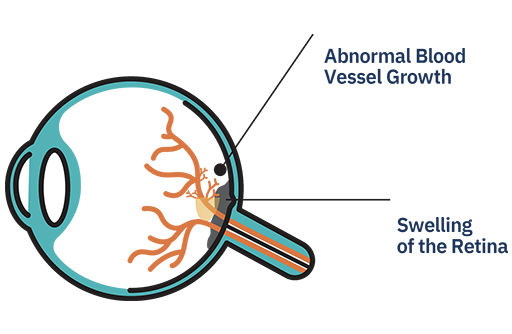
Macular degeneration happens when abnormal vessels grow at the macula (central part of the retina). Abnormal vessels can bleed and leak fluid in the back of the eye, which causes swelling of the retina (the light sensitive layer at the back of the eye) and vision loss.
nAMD may affect one eye or both but only affects the central part of vision.
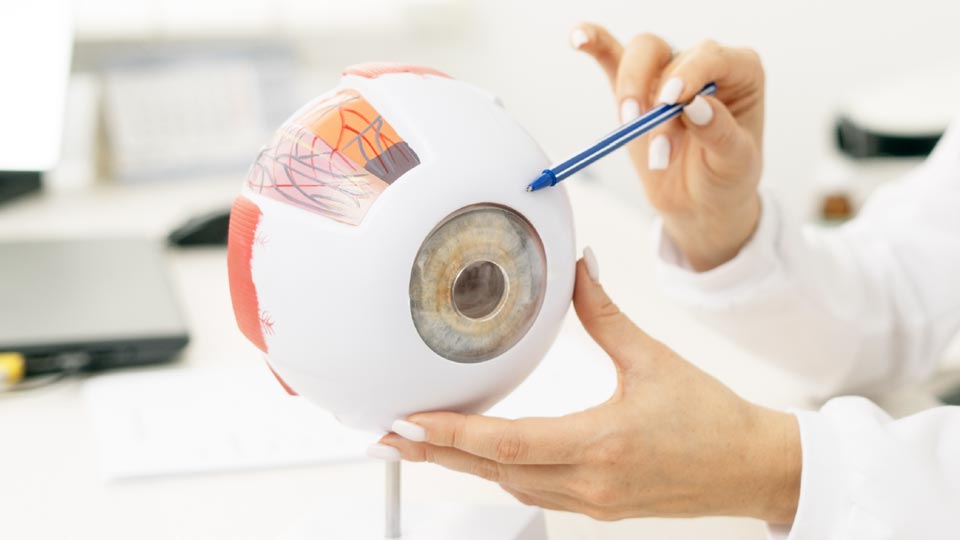
The retina is the back layer inside the eye that records the images we see — and sends them to the brain.
The macula is the central part of the retina, responsible for our sharpest vision. This is used to read, drive a car, recognise faces or colours, and see objects in fine detail.

Healthy Eye
Eye Affected by nAMD
There are 2 types of proteins in the eye that cause swelling. VEGF and Ang-2 are 2 proteins that can lead to vision loss in people with nAMD. These proteins allow the formation of abnormal and weakened blood vessels that can grow and leak fluid.
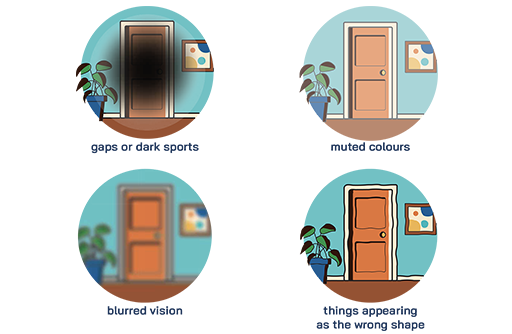
Symptoms may included:
- A dark, empty area in the center of vision
- Colours seeming less bright
- Blurry or distorted vision – such as straight lines appearing wavy
- Objects appearing as the wrong shape or size
- Difficulty reading, driving, watching TV, or doing other daily tasks
Treatment and Additional Recommendation
Treatments for nAMD
Treatments are available for nAMD that can help to stop further sight loss. However, they can’t “undo” damage that’s already occurred.
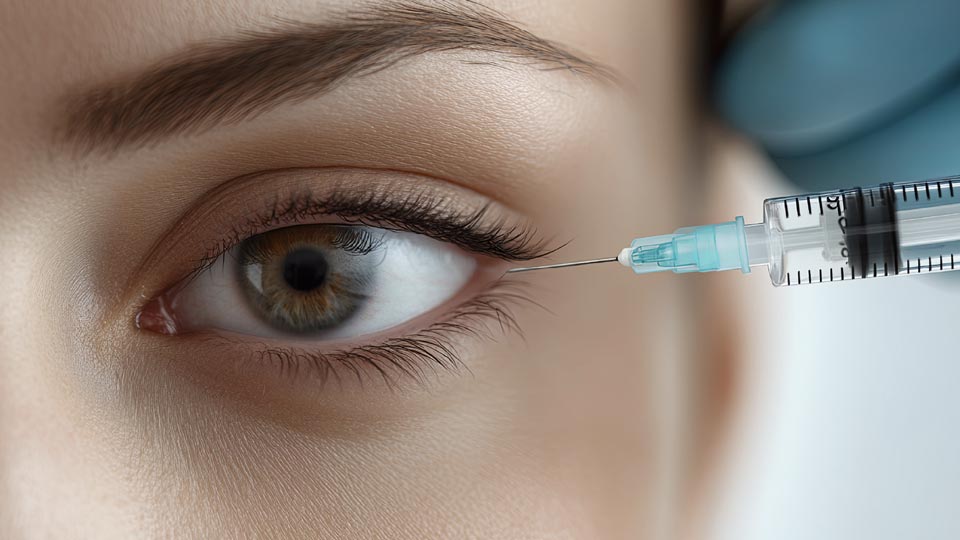
- Intravitreal Injection is the standard treatment to help prevent abnormal blood vessel growth. Most of these treatments block one pathway at VEGF (Anti-VEGF), while the latest treatments act through the inhibition of two pathways (Anti Ang-2/VEGF) to improve outcomes.
- Other treatments such as photodynamic therapy, laser photocoagulation, and surgery, may also be suitable in some cases depending on the doctor’s discretion.
Dietary and Supplements which may Beneficial
- Vitamin C is found in vegetables and fruits high in vitamin C, such as oranges, tomatoes and lemons etc. The recommended amount is 500 milligrams per day.
- Vitamin E is found in cereal oil, corn and soybean etc. The recommended amount is 400 IU per day.
- Copper is found in liver and egg yolks etc. The recommended amount is 2 milligrams per day.
- Zinc is found in meat, liver and oysters etc. The recommended amount is 80 milligrams per day.
- Lutein and Zeaxanthin are found in spinach, egg yolks and corn etc. The recommended amount is 10 milligrams of lutein and 2 milligrams of zeaxanthin per day.
Consult your doctor about which supplement, if any, is right for you, especially if you have underlying health conditions.
Lifestyle Modification
- Avoid regular exposure to intense sunlight; if necessary, use UV-filtering sunglasses
- Maintain a healthy weight
- Avoid smoking
- Limit high-fat foods and increase the intake of green vegetables and fruits daily
Related Article
Intravitreal (Anti-VEGF)Injection for nAMD